
The Negativity Bias: How to Retrain Your Brain to Notice & Feel More of the Good
I used to be a pretty negative person.
I could spot what was wrong almost immediately. And when several things went wrong at once, I had a habit I now call stacking the bad.
Traffic was terrible. Then someone was rude. Then something went wrong at work. Then I spilled something.
See? Everything is going wrong.
I still catch myself doing it sometimes.
But now I understand something I didn't understand then:
My brain was doing exactly what human brains evolved to do.
Why Our Brains Focus on the Negative
Psychologist and author Dr. Rick Hanson has written extensively about the brain's negativity bias.
For our early ancestors, noticing danger was critical to survival. The brain that remembered the dangerous animal, threatening person, poisonous food, or unsafe location had an advantage.
Good experiences mattered, of course. But failing to fully appreciate a beautiful view wasn't going to kill you. Failing to notice danger might.
So the human brain became particularly sensitive to potential threats and negative experiences. And, unfortunately, we're walking around in modern life with much of that same ancient equipment.
The “threat” today might be an email from your boss, a rude comment, a disappointing number on the scale, someone cutting you off in traffic, or lying awake worrying about tomorrow.
Our brains grab onto these things.
Meanwhile, good moments often slide right past us.
We Have Good Experiences...But We Gloss Over Them
Think about how many pleasant things may have already happened today.
Maybe your coffee tasted great.
Someone smiled at you.
Your dog was thrilled to see you.
You accomplished something.
You heard a song you love.
For a few seconds, you felt peaceful.
And then...
What's next?
This is something Hanson's work has helped me understand: having a good experience isn't necessarily the same as really taking it in.
We often gloss right over the good.
Neuroplasticity Means We Can Practice Something Different
This is where I get really excited! We can change our brains and how we feel! Life coaching gets us into action where life can feel better!!
Our brains aren't permanently fixed. Through neuroplasticity, the brain continues to change in response to repeated experiences and patterns of attention. That means we can practice becoming better at noticing and absorbing what's good. (Not fake good.)
Not pretending your marriage is fine when it isn't.
Not ignoring burnout.
Not avoiding grief.
Not slapping a positive affirmation over something that genuinely needs to change.
This is about seeing reality more completely:
The bad. The neutral. AND the good.
Because if your brain is already naturally turning up the volume on what's wrong, sometimes you need to intentionally turn up the volume on what's right.
I've Seen the Difference in My Own Life
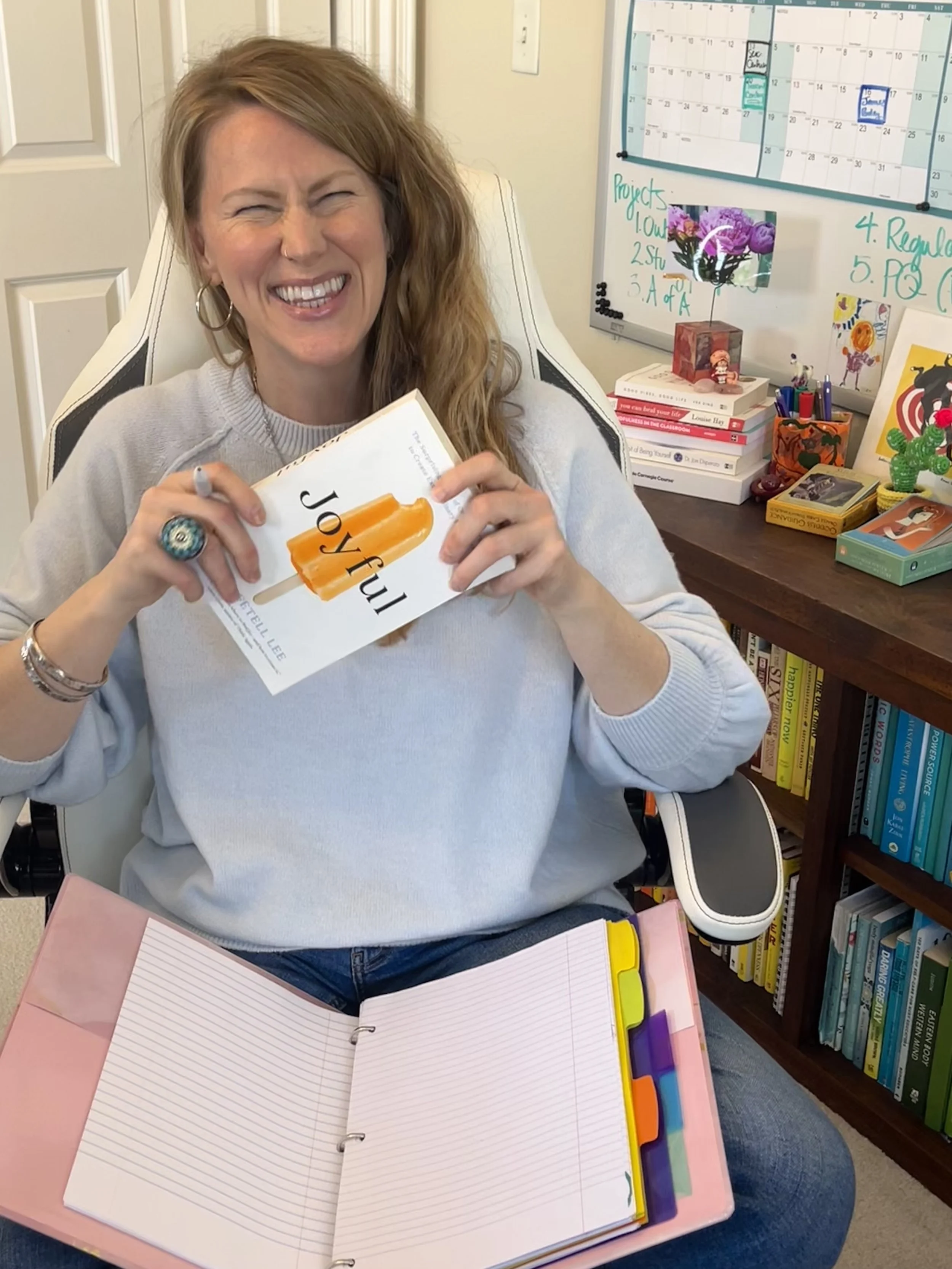
This practice has genuinely changed how life feels to me. I walk around feeling lighter, with a baseline of my joy.
Here's a tiny example. Someone cuts me off in traffic. Old me could get angry, judge the person, replay it and carry that irritation with me.
Now I try to catch myself.
Maybe they're late.
Maybe they're rushing to someone who needs them.
Maybe they're having the worst day of their life.
I have absolutely no idea what is going on.
But when I assume something more compassionate instead of automatically assuming the worst, something happens inside me. I feel lighter. I don't stay angry. I'm less likely to snap at the next person. I can offer that stranger a little grace and move on. Kindness in me feels better than anger.
And as I've practiced becoming less judgmental toward other people, I've also become better at offering grace to myself.
That's a pretty wonderful side effect.
How to Retrain Your Brain to Notice the Good
You don't need another elaborate morning routine. Start by noticing small moments that are already happening.
When something feels good, pause instead of immediately moving on.
Stay with it for 10–20 seconds. Notice how it feels in your body.
Maybe it's:
feeling the sunshine on your face
hearing someone you love laugh
realizing you handled something well
noticing that your body feels calm
receiving a thoughtful text
getting into a warm bed
laughing at something ridiculous
feeling proud of yourself
noticing a beautiful tree, flower or sky
realizing, Right now, I'm actually okay.
These experiences don't have to be huge. In fact, most won't be.
The power comes from repetition: make this your thing!!
Make It a Habit
One beautiful sunset isn't going to rewire your brain.
But consistently noticing moments of safety, connection, accomplishment, pleasure, gratitude and joy can begin to change what your brain pays attention to.
This isn't about becoming someone who never feels negative.
I certainly haven't.
I can still tumble down that negative hole.
The difference is that I don't live there anymore.
I've practiced finding my way back.
And after doing this work for years, I can say something I couldn't always say:
Life feels better inside me.
Not because everything around me is perfect.
Because I've gotten better at experiencing the good that's already there.
And I think we all deserve more of that.
⬆️ Want more…? Practical tools for stress, anxiety, nervous system regulation, habits, and happiness and just some fun inspo over on Instagram: I’d love to see you there! @uplevellifecoach Just click HERE!
⬆️ Would you love more personalized support?
Reading about these tools is one thing. Figuring out how to apply them to your life…and actually creating lasting change - is another. That’s where I can really help!! We can get to the root of what’s keeping you stressed, calm your nervous system, find practical solutions, and build the habits, boundaries, and mindset shifts that help life feel good again. Ping me HERE!
More joy. Less stress. A life that feels good to live.
If there’s someone you know who could benefit from this, please forward this along. My goal is to help as many people as possible!