
Maybe Grandma Was Onto Something: Why Slower, Simpler Living Is Making a Comeback
Something interesting is happening.
After years of faster, shorter, easier, and more convenient, people seem to be craving the opposite.
Knitting. Gardening. Baking bread. Reading actual books and magazines. Puzzles. Sewing. Birdwatching. Cooking from scratch. Sitting outside.
So-called “grandma hobbies” are making a comeback. It was written about in the NY Times last month!
And I don't think it's just nostalgia.
I think we are tired and CRAVING change.
We optimized almost everything
Think about how much of modern life has been designed around speed:
Fast food. Same-day delivery. Ten-second videos. Headlines instead of articles. Texts instead of conversations. Meals eaten while working. Podcasts played at 1.5x speed.
We can accomplish more, consume more and get information faster than our grandparents could have imagined.
But has all that speed actually made us feel better?
For many people, the answer seems to be no.
We're overstimulated. Distracted. Rushed. Tired. Constantly consuming something and rarely fully present for any of it.
And perhaps that's part of why slower ways of living suddenly feel so appealing.
We're craving depth again
One of my favorite examples is Trader Joe's Fearless Flyer, the ad pamphlet that comes free in the mail.
In a world of BUY NOW buttons and six-second videos, they write actual paragraphs about their food. They tell you where something came from, why they chose it, and what makes it interesting. It’s sweet and funny!
You have to stop and read.
There's something wonderfully old-fashioned about that.
We're also seeing people rediscover magazines, physical books, crafts, gardens and hobbies that can't be completed with one swipe of a finger.
I myself recently fell in love with Savannah, GA and ended up buying a subscription to the Savannah magazine. I love it! I sit down and read it cover to cover.
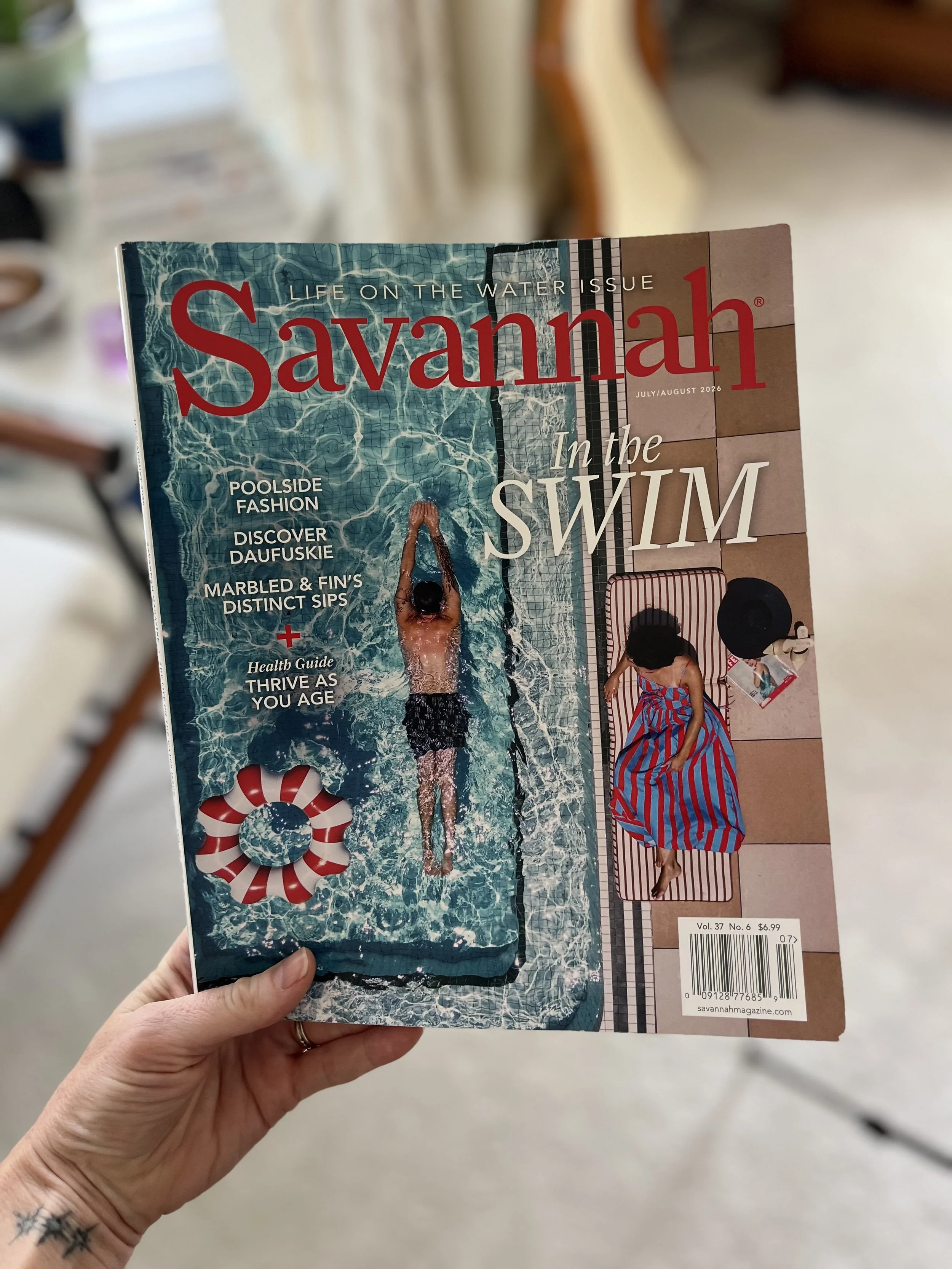
My new favorite magazine!
So, maybe we're remembering something important:
Not everything needs to happen quickly to be worthwhile.
I think we've created “ultra-processed” lives
We've learned a lot about highly processed foods. Convenience doesn't equal nourishment.
I wonder if the same principle applies to the way we're consuming life.
A steady diet of highly processed, bite-sized content may not be particularly nourishing for our brains either.
Scroll. Click. Swipe. Buy. Watch. Repeat.
Our brains get plenty of stimulation. But stimulation isn't the same thing as satisfaction.
And convenience is NOT always the same thing as well-being.
Our grandmothers naturally did things our nervous systems like
Previous generations certainly didn't have everything figured out, and I'm not interested in romanticizing the past.
But - some of the rhythms built into everyday life were very different.
People gardened.
They cooked.
They repaired things.
They sat on porches.
They walked.
They read.
They wrote letters.
They played cards.
They made things with their hands.
They ate meals around tables.
They visited neighbors.
And sometimes they simply sat there. No phone. No podcast. No second screen.
Many of these activities naturally provide things that help humans feel good: rhythm, sensory experiences, movement, connection, creativity, focused attention, and the satisfaction of making or completing something.
There's another important difference.
They often did one thing at a time.
We've become so accustomed to multitasking that simply chopping vegetables, knitting a scarf or sitting outside with a magazine can almost feel rebellious.
Slower doesn't mean less ambitious
This isn't about giving up technology, deleting every app or pretending life was better in 1955.
I love convenience and technology. I'm also a big believer in progress.
The invitation is simply to notice when more, faster and easier stop making life better.
Sometimes the thing our nervous system needs isn't another productivity strategy.
It's making soup.
Walking somewhere.
Calling a friend.
Growing tomatoes.
Doing a puzzle.
Reading a magazine in the sun.
Sitting outside after dinner without needing to accomplish anything.
Try one “grandma habit” this week
Ask yourself:
What did my grandparents' generation do that might actually feel good to me?
Choose one thing.
Cook something from scratch. Visit a farmers market. Plant herbs. Read a physical book. Invite someone over. Play cards. Bake something. Walk for the sake of walking. Pick up an old hobby.
Then here's the important part: Don't optimize it.
Don't photograph it for social media.
Don't listen to a self-improvement podcast while doing it.
Don't track your progress.
Don't turn it into another thing you're supposed to excel at.
Just do it.
Notice the smells. The sounds. Your hands. The people around you.
Be where your feet are.
We've spent decades figuring out how to make life faster.
Maybe the next frontier of well-being is remembering how to make it feel like life again.
Maybe Grandma was onto something.
⬆️ Want more…? Practical tools for stress, anxiety, nervous system regulation, habits, and happiness and just some fun inspo over on Instagram: I’d love to see you there! @uplevellifecoach Just click HERE!
⬆️ Would you love more personalized support?
Reading about these tools is one thing. Figuring out how to apply them to your life…and actually creating lasting change - is another. That’s where I can really help!! We can get to the root of what’s keeping you stressed, calm your nervous system, find practical solutions, and build the habits, boundaries, and mindset shifts that help life feel good again. Ping me HERE!
More joy. Less stress. A life that feels good to live.
If there’s someone you know who could benefit from this, please forward this along. My goal is to help as many people as possible!