
When Pain Makes Everything Harder: How to Reclaim Your Power and Still Find Joy
I've been struggling with a chronic pain issue lately.
And for the record - I have struggled with chronic pain for years….then I did all the tools that I teach, and my pain eased up: my headaches are now very infrequent, and my gut issues healed. But lately, I have new nerve damage in my neck that isn’t stress-related. I’ve been doubling down on the tools that I learned that helped me through those hard times.
And while I teach people how to manage stress, regulate their nervous systems, and build resilience, I'm being humbly reminded firsthand just how difficult it can be to practice these things when you're physically hurting.
It's not just the pain itself.
It's the sadness of not being able to do everything you want. The frustration when your body doesn't cooperate. The exhaustion of having something uncomfortable demanding your attention all day long.
And perhaps one of the hardest parts? Trying to remain patient, pleasant, productive, and emotionally available when you're already struggling.
I've been thinking a lot about this, and I want to share some of the tools I'm using, because whether you're dealing with chronic pain, an injury, illness, or even emotional pain, there ARE ways to reclaim some of your power.
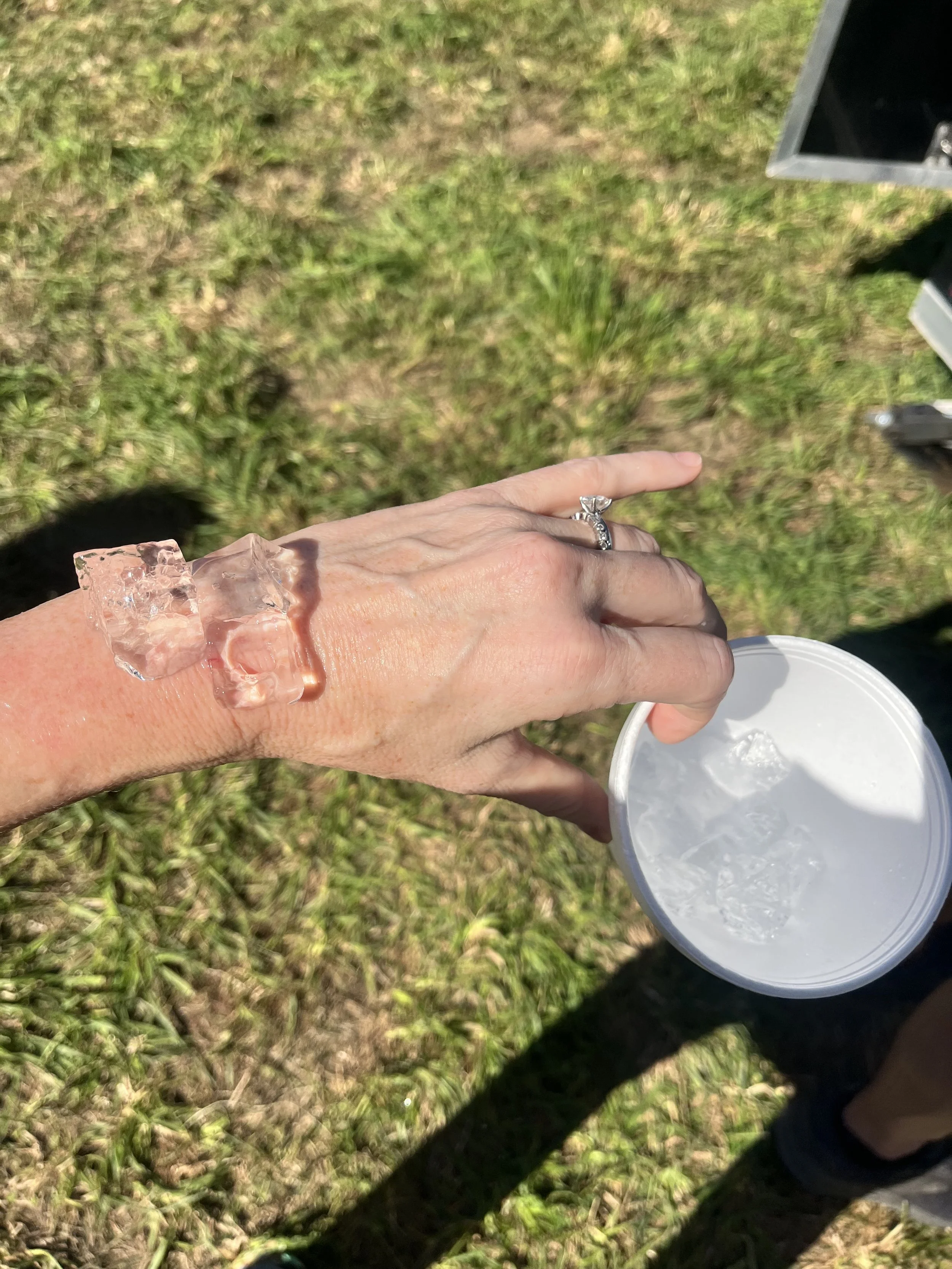
Ice is the only thing that helps the pain and itching right now and so I travel places with ice packs. When those warm up, I get ice cubes. I hope this is temporary; it makes things SO HARD.
Why Pain Makes Everything Feel Harder
One of the concepts I teach in my coaching and workshops is the window of tolerance.
Think of it as the range of stress your nervous system can handle while you're still able to think clearly, manage your emotions, and respond to life's challenges.
When we're well-rested, feeling good, and supported, we often have more capacity to deal with frustrations.
But when we're hurting? Our window of tolerance can get much smaller.
Pain demands attention. It can disrupt sleep, increase stress, and use up valuable mental and emotional resources.
That means:
Little annoyances can feel enormous
We may become more impatient or reactive
Concentrating and making decisions become harder
We may withdraw from people or activities we love
Our emotional resilience can take a hit
And here's the important part: This doesn't mean we're weak or failing. It means we're dealing with an additional load.
Understanding that can help us stop judging ourselves and start supporting ourselves.
7 Practical Tools for When You're Hurting
1. Name What's Happening
When you notice yourself becoming frustrated, overwhelmed, or irritable, pause.
Instead of thinking, "Why am I being so cranky?" try:
"I'm in pain today. My capacity is lower than usual. It makes sense that things feel harder."
Naming what you're experiencing can help create a little space between the discomfort and your response.
And that space gives you more choice.
2. Separate What You Can Control From What You Can't
This is one of my favorite coaching tools, and it's been especially helpful lately.
When we're hurting, it's easy to focus on everything we wish were different. But continually fighting against what we can't change can add another layer of suffering. Try drawing two columns on a piece of paper.
Outside My Control:
Whether the pain disappears today
How quickly my body heals
Other people's reactions
The fact that I have limitations right now
Within My Control:
How I talk to myself
When I rest and recharge
How I communicate my needs
Whether I ask for help
Which activities I prioritize
The small pleasures I make room for
Whether I seek appropriate medical care
Then ask: "Where can I put my energy that will actually help me?" This is how we begin to reclaim agency.
3. Regulate Your Nervous System Before You React
When you're hurting, everyday stress can push you closer to your limit.
A small frustration at work or an innocent comment from a loved one might suddenly feel like too much.
Try a 60-second reset:
Pause what you're doing
Feel your feet supported by the ground
Relax your jaw and shoulders
Take a few gentle, slow breaths, if comfortable
Remind yourself: "I can slow down. I don't have to react right now."
This may not eliminate the pain, but it can help reduce some of the additional tension and stress surrounding it.
4. Lower the Demands, Not Your Self-Worth
This one is especially important for high achievers. We're used to getting things done, showing up for everyone, and pushing through. But sometimes resilience looks like doing LESS.
Ask yourself: "If I only had 60% of my usual energy today, what would actually matter?" Maybe you postpone something, simplify dinner, delegate a task, or skip a nonessential commitment.
Adjusting your expectations isn't giving up. It's working WITH your current capacity instead of fighting against it.
5. Communicate Before Frustration Takes Over
When we're hurting, we may unintentionally become short with the people around us.
Instead of waiting until you're irritated, try saying:
"I'm having a tough pain day. I'm feeling a little overwhelmed, so I may need some quiet time or extra patience."
Or at work:
"I'm managing something physically challenging today. I'm going to focus on my highest priorities and adjust a few things."
You don't have to share private medical details to communicate your needs. A little honesty can prevent misunderstandings and protect our relationships. And if you do snap at someone? Repair it. Apologize, explain without making excuses, and try again.
6. Stop Waiting for Everything to Be Better Before Allowing Joy
This might be the biggest lesson I'm practicing.
I can feel sad about my pain AND still have a good day.
I can feel frustrated AND laugh with a friend.
I can wish my body felt different AND appreciate everything it still allows me to experience.
In positive psychology, we talk about intentionally noticing and savoring positive experiences. And when life is difficult, this practice becomes even more valuable.
Maybe it's:
A delicious latte
A warm shower
Time with a pet
A beautiful view
A funny conversation
Music you love
A cozy evening with a good movie
These things don't erase pain. But they remind us that pain isn't the ONLY thing happening in our lives. We can make room for both the hard and the good.
7. Ask a Better Question
When we're struggling, our minds naturally ask questions like:
"Why is this happening to me?"
"When is this going to end?"
"What if this never gets better?"
Those questions are understandable. But sometimes they keep us stuck in worry and frustration. Instead, try asking: "What would help me feel just 5% better right now?" Not completely better. Just 5%. Maybe you need to change positions, take a break, reach out to someone, get outside, or give yourself permission to do nothing for a while. Small actions help us move from feeling helpless toward feeling capable again.
And when you're dealing with something that feels outside your control, that shift matters.
The Difference Between Pain and Additional Suffering
There's an important distinction worth understanding. Pain is real. It's not something we can simply think away. But sometimes we unintentionally add another layer of suffering through self-criticism, catastrophic thinking, guilt, or constantly comparing what we can do today with what we used to do.
Thoughts like:
"I should be able to handle this."
"I'm falling behind."
"I'm ruining everyone's day."
can make an already difficult experience even heavier. What if we replaced those thoughts with:
"This is hard, and I'm doing the best I can."
"My needs matter, too."
"I can adjust my expectations without giving up on myself."
Self-compassion doesn't cure physical pain. But it can help us stop adding unnecessary emotional distress to an already challenging experience. And of course, these emotional tools complement, rather than replace, appropriate medical care and pain management. (Please see your doctor and advocate for yourself.)
Your Challenge This Week: Reclaim One Small Choice
Whether you're dealing with physical pain, emotional pain, stress, or simply a difficult season of life, I encourage you to try this. The next time you feel overwhelmed, ask yourself three questions:
1. What am I carrying right now?
Recognize the load. Give yourself some grace.
2. What is within my control?
Find one choice that's still yours to make.
3. What would make this moment 5% easier?
Take one tiny step. Because resilience isn't about always feeling good, staying positive, or powering through. It's about learning to care for yourself, adapt, and keep creating a life that feels good to live...even when parts of it are hard.
And that's what I'm practicing right alongside you. 💛
⬆️ Want more help…? On Instagram, I share a TON of tips and inspiration to help live a life with more joy and less stress. I'd love to see you there! @uplevellifecoach — Just click HERE!
⬆️ Would you love more personalized support?
Reading about these tools is one thing. Figuring out how to apply them to your life…well, that's another. That's where I can really help!! I've done it myself and helped countless clients do it too. We can get to the root of what's keeping you stressed, and really change things so that you feel good again. Ping me HERE!
💛 More joy. Less stress. A life that feels good to live.
💛 If you loved this email, forward it to someone who might love it too.